
The marriage penalty in Switzerland is a key criticism of the Swiss tax system. It arises from the joint taxation of married couples and progressive taxation in Switzerland. With the reform for individual taxation in Switzerland, this problem is to be reduced in the future.
The Swiss marriage penalty – many couples hear the term for the first time when they see their tax bill after getting married.
Suddenly, a simple question arises.
Why do we pay together more taxes than before?
This question often comes up.
And the answer doesn't lie in marriage itself.
It lies in the Swiss tax system.
If you understand how the progressive taxation in Switzerland works, it quickly becomes clear why the so-called marriage penalty can arise.
What is the Swiss marriage penalty?
The Swiss marriage penalty describes a situation where a married couple pays more taxes than two unmarried individuals with the same income.
The reason:
Married couples are treated as a single economic unit for tax purposes.
This means:
- Income is combined
- Assets are combined
- tax is calculated on the total income
And this is where the progressive taxation comes into play.

Progressive taxation in Switzerland simply explained
The progressive taxation in Switzerland means:
The higher the income, the higher the tax rate.
This sounds logical at first.
However, when two incomes are combined, this can lead to the joint income falling into a higher tax bracket.
A small example makes this clearer.
Example: single vs. married
Single Persons
Taxable income: CHF 90,000
Taxable assets: CHF 50,000
→ Taxes: CHF 13,566
If two people are unmarried, the result is:
Person A: CHF 13,566
Person B: CHF 13,566
Total: CHF 27,132
Married Couple
Now the same figures, but for a married couple.
Income: 2 × CHF 90,000
Assets: 2 × CHF 50,000
The tax is calculated on the total joint income.
→ Taxes: CHF 34,863
This means:
In this example, the married couple pays approximately CHF 7,700 more in taxes.
This very difference is often referred to as the Swiss Marriage Penalty .
Why Secondary Earners Are Particularly Affected
A point rarely discussed.
In many households, there is a secondary earner.
This often includes:
- Part-time working partners
- Parents returning after parental leave (usually the mother)
- or individuals re-entering the workforce
When both incomes are taxed jointly, the following occurs:
The second income is often taxed at the higher tax rate .
This can lead to:
- more taxes are due
- less net income is left from the second income
- additional employment seems financially less attractive
That's why the marriage penalty in Switzerland is also often discussed in the context of work incentives .
Individual Taxation in Switzerland: The Adopted Reform
One concept that has been widely discussed is the individual taxation in Switzerland.
The idea is simple.
Each person is taxed individually, regardless of marital status.
This means:
Partners are taxed on their income separately the second income does not automatically move into a higher tax bracket the so-called marriage penalty can be significantly reduced.
On March 8, 2026 Switzerland decided in a vote to introduce individual taxation.
This aims to reform the previous system of joint taxation for married couples.
The exact implementation will be gradual and may still take time depending on legislation and transitional rules.
Swiss Marriage Penalty Vote: Why the Issue Was Political
The vote on the Swiss marriage penalty was a political issue for years.
Parties repeatedly discussed reforms.
The reason:
The previous system could have an impact on:
- Work incentives
- Equality
- Tax fairness
After numerous political discussions, Switzerland finally voted for the introduction of individual taxation to reduce tax disadvantages for married couples.
What couples should consider regarding taxes in Switzerland
Taxes are complex.
However, a few points help to better assess the situation.
As a couple, when planning our taxes, we should consider the following points:
1. Income structure
Does one person earn significantly more?
Or do both earn a similar amount?
This affects tax progression.
2. Canton of residence
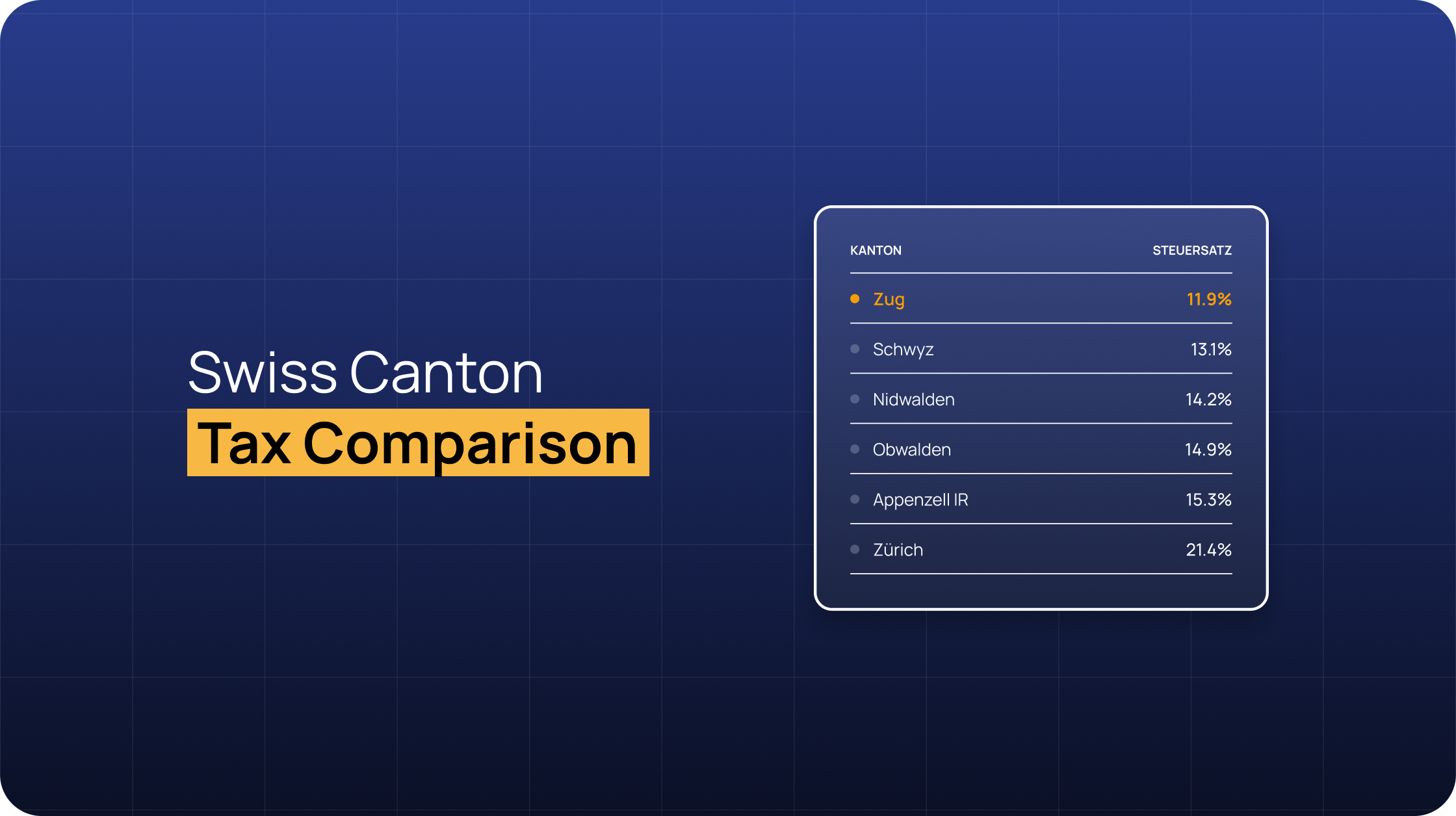
Switzerland has 26 different tax systems.
Your place of residence can significantly alter your tax burden.
3. Retirement planning
Deposits into Pillar 3a reduce your tax burden.
Especially for higher incomes.
Switzerland has 26 different tax systems.
Depending on your canton of residence, your tax burden can vary significantly. A Swiss cantonal tax comparison helps couples better understand the tax differences between cantons.
Conclusion: What does individual taxation in Switzerland mean for married couples?
The marriage penalty in Switzerland was a controversial topic for a long time. With the introduction of individual taxation in Switzerland , the tax disadvantage for many married couples is expected to be reduced in the future. Nevertheless, it remains important to review your tax planning early – especially regarding income, canton of residence, and family situation.
More information on individual taxation in Switzerland
If you want to learn more about individual taxation in Switzerland, the abolition of the marriage penalty, and the vote on March 8, 2026 , you can find more information on the official federal website:
Disclaimer: The content of this blog post is for informational purposes only and does not constitute professional advice.
Each individual case should be reviewed individually and we recommend that you seek professional advice for specific questions.