Shakira's Tax Residency Case: What a €55 Million Tax Case Reveals About Tax Residency and Wealth Planning

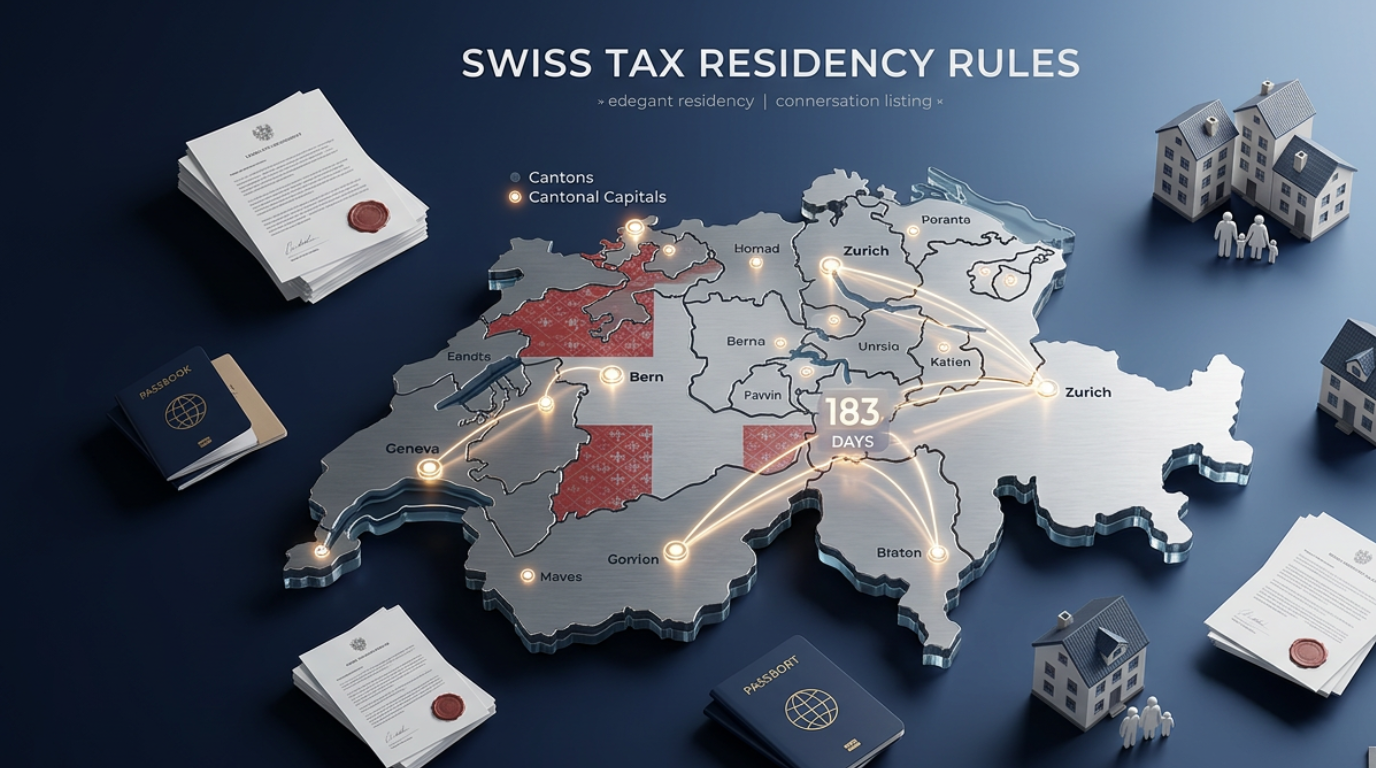
Tax residency is more important than many people think.
Could you prove where you actually lived last year?
Would your travel records support your story?
Could tax authorities question where you pay taxes?
Many people believe tax residency is straightforward.
You live somewhere.
You pay taxes there.
Done.
The reality?
Far from it.
This is precisely what Shakira's current tax residency case in Spain demonstrates.
A Spanish court ordered the repayment of more than 55 million euros in fines plus interest, after authorities failed to prove that Shakira was tax resident in Spain in 2011.
The case highlights something that many entrepreneurs, executives, investors, and internationally mobile families underestimate:
Tax residency is no longer just an administrative matter.
It's a matter of documentation, a financial matter, and sometimes even a reputational one.
What happened in Shakira's tax residency case?
According to reports from DER SPIEGEL, the Spanish court ruled that tax authorities could not prove Shakira's tax residency for the year 2011.
For those who wish to read more about the case: DER SPIEGEL report on the case.
In a widely discussed court case, Spain's Supreme Court ruled that authorities could not sufficiently prove that Shakira was liable for taxes in Spain in the 2011 tax year.
Why is this relevant?
Because tax residency determines where taxes are paid.
And if multiple countries simultaneously claim the right to taxation, it can quickly become expensive.
The court concluded that key criteria had not been proven:
A stay of more than 183 days
The center of economic interests in Spain
Strong family ties in the country
Simply put:
Authorities could not prove that Spain was indeed the center of her life in the year in question.
Shakira's legal team argued, among other things, with the following facts:
- She performed 120 concerts in 37 countries in 2011
- She had no permanent residence in Spain
- She had no children in Spain at the time
- The base of her business activities was outside Spain
The court also criticized the tax authorities for heavily focusing on the Bahamas being considered a tax haven, instead of presenting concrete facts regarding her actual tax residency.
The message?
Assumptions are not evidence.
In modern tax disputes, facts usually prevail.
Why tax residency is becoming more important globally
Tax authorities are scrutinizing more closely today.
Why?
Because international mobility has changed everything.
Today, people work remotely.
Entrepreneurs run businesses in multiple countries.
Executives travel between different locations.
Families own properties in multiple countries.
And suddenly, one question becomes very costly:
“Where is your tax residency actually located for tax purposes?”
This can lead to problems such as:
Overlapping Tax Residencies
Two countries can simultaneously claim that someone is tax resident.
In some cases, dual tax residency even arises
The consequences: Double taxation, reporting obligations, and legal complexity.
Retroactive Tax Risks
Tax authorities can initiate investigations years later.
What seemed harmless at the time can later become a major problem.
Reputational Risks
For entrepreneurs, executives, or public figures, tax cases often become public.
And once headlines emerge, the reputational damage can be greater than the financial damage.
Lengthy Legal Disputes
Tax residency disputes are increasingly becoming questions of evidence.
This means:
Whoever has the better documentation often wins.
When it comes to tax residency, facts count, not assumptions
Many get this wrong.
Many believe that tax residency is based on what one declares.
In practice, this is often not the case.
Increasingly, patterns and evidence matter.
For instance, authorities check:
- Travel data
- Number of days per country
- Property ownership or use
- Family ties
- Business activities
- Place of work
- Banking activities
- Economic interests
- Children's school location
- Social and personal relationships
In many cases, one's lifestyle leaves a trail.
And these traces are exactly what count.
Tax Residency and the 183-Day Rule: Is It Really That Simple?
Many talk about the 183-day rule.
The truth is:
It's often not that simple.
Yes, many countries use the 183-day rule to determine tax residency or domicile. However, even if you spend less than 183 days in a country, you're not automatically in the clear.
Authorities have long looked beyond mere days of stay and examine, among other things:
Where your economic center of vital interests lies
Your family circumstances
Where your business activities take place
Whether another country is your actual center of vital interests
Therefore, international tax planning should never be based on assumptions.
Documentation counts.
Facts count.
Timing counts.
What entrepreneurs and international families can learn from this
The most important takeaway from the Shakira case is simple:
Good documentation beats good stories.
Anyone operating internationally quickly realizes:
When it comes to tax residency, it's less about statements and more about evidence.
This means organization in:
- Travel documentation
- Tax documents
- Business Substance
- Contracts and employment relationships
- Real estate arrangements
- Financial and family ties
Because if questions arise years later, memory alone won't suffice.
Documentation matters.
Why this is important for entrepreneurs and expats in Switzerland
Many entrepreneurs, investors, expats, and international families move between Switzerland and other countries.
However, even within Switzerland, your place of residence can significantly influence your tax burden. The differences between cantons can be substantial, which is why a Swiss cantonal tax comparison is important when evaluating a relocation.
Especially for expats and entrepreneurs, the question of Swiss tax residency is becoming increasingly important.
If you relocate, work internationally, or spend time in multiple countries, you should seek clarity early on.
This can prevent significant problems down the line.
You can find more topics on tax planning in Switzerland, taxation of expats, or corporate structuring in Switzerland in the MKY Blog
Conclusion: Tax residency becomes a matter of asset protection
Tax residency no longer just means where you sleep.
It is increasingly becoming a matter of asset protection, documentation, and, more and more, reputation.
The Shakira case clearly shows one thing:
When tax authorities question tax residency or domicile, facts count more than assumptions.
And as countries worldwide seek additional tax revenue, such cases are likely to increase in the future.
Tax residency is more important than many think.
Disclaimer: The content of this blog post is for informational purposes only and does not constitute professional advice. Each individual case should be reviewed individually and we recommend that you seek professional advice for specific questions.